System Command Templates & Enhanced Webhook Security
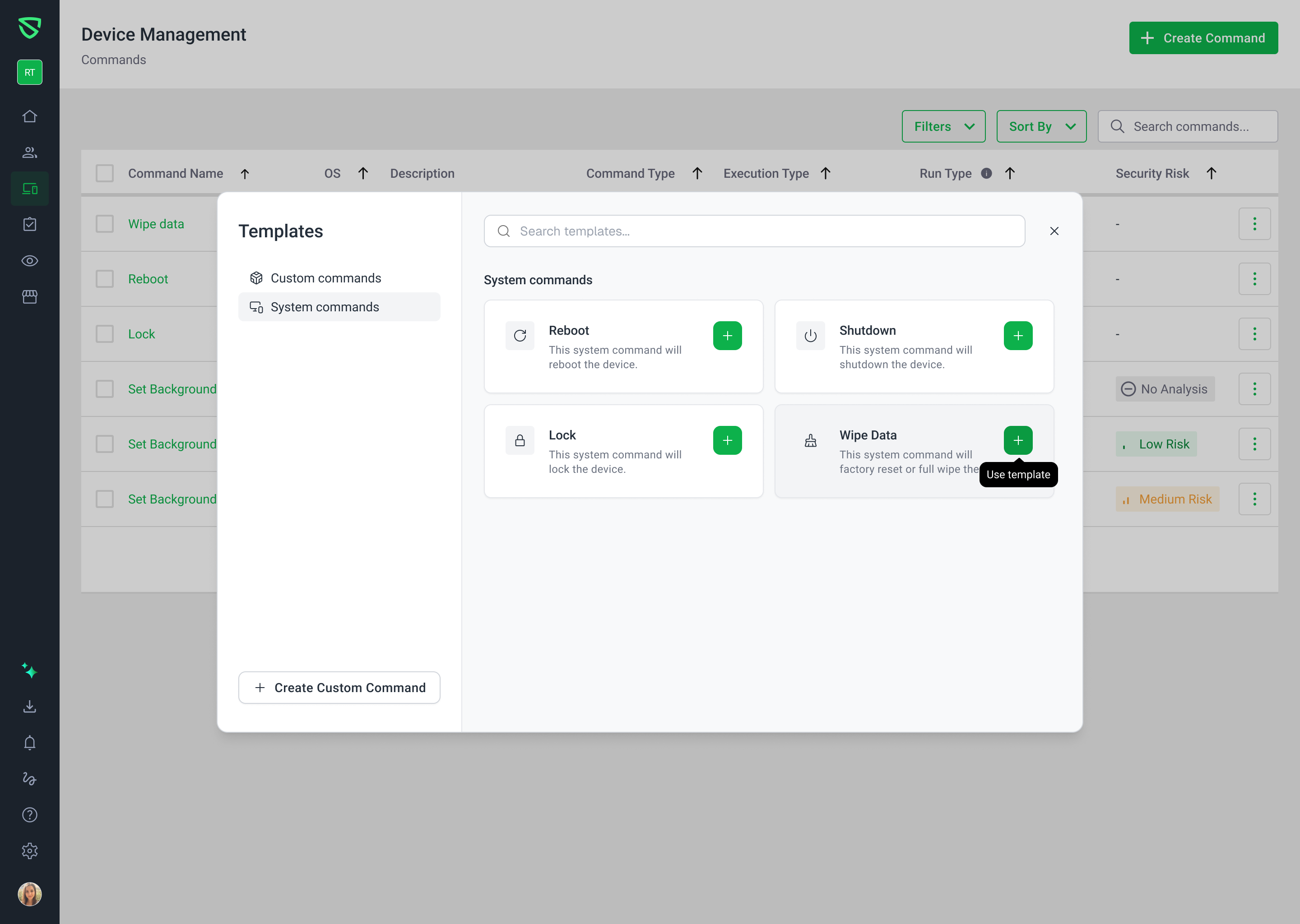
We are excited to announce the release of System Command Templates and a suite of security enhancements for Webhook-triggered actions. This update provides administrators with pre-defined, high-reliability commands and robust guardrails for automated device management across macOS, Windows, and Linux.
🚀 New: System Command Templates
Administrators can now utilize standardized templates for critical system operations, ensuring consistent execution across different operating systems without manual scripting.
Supported Actions: Reboot, Shutdown, Remote Lock (Lost Mode), and Wipe Data (Factory Reset).
Cross-Platform Support: Native execution via the Swif Agent on Windows and Linux, and MDM-level commands for macOS.
Bulk Execution: Trigger these templates across a heterogeneous fleet of devices simultaneously.
🛡️ Enhanced Webhook Security & UX
We have significantly upgraded the security model for triggering commands via external systems (e.g., CI/CD pipelines, security scanners).
IP Allowlisting: Restrict webhook execution to specific IP addresses or CIDR ranges, ensuring only trusted systems can trigger remote commands.
Time-Gated Token Management: Improved visibility into webhook token validity with real-time "Expires in Xm" countdowns and clear "Expired" states.
Targeted Execution: Webhooks now support targeting specific endpoints using
deviceIDsfor improved reliability on Windows and Linux systems.
⚠️ Destructive Action Guardrails
To prevent unauthorized or accidental execution of high-risk operations, we have implemented multi-layered safety checks:
2FA Verification: Destructive commands (such as Wipe Data) now require a mandatory 2FA verification flow before they are enqueued.
Risk Communication: New UI banners and explicit warnings provide clear context for high-risk operations.
Wipe Configuration: Granular control over "Wipe Data" commands, including the ability to specify Wipe Type (Partial vs. Full) directly in the configuration.
🛠️ Technical Improvements
macOS Remote Lock: Integrated 6-digit PIN requirements for macOS lock commands to align with Apple MDM protocols.
Reliable Targeting: Standardized on
deviceIDsfor webhook payloads to resolve inconsistencies with serial numbers across different hardware vendors.
For detailed configuration steps, please refer to our updated documentation: Run a Command Script | Help Center